
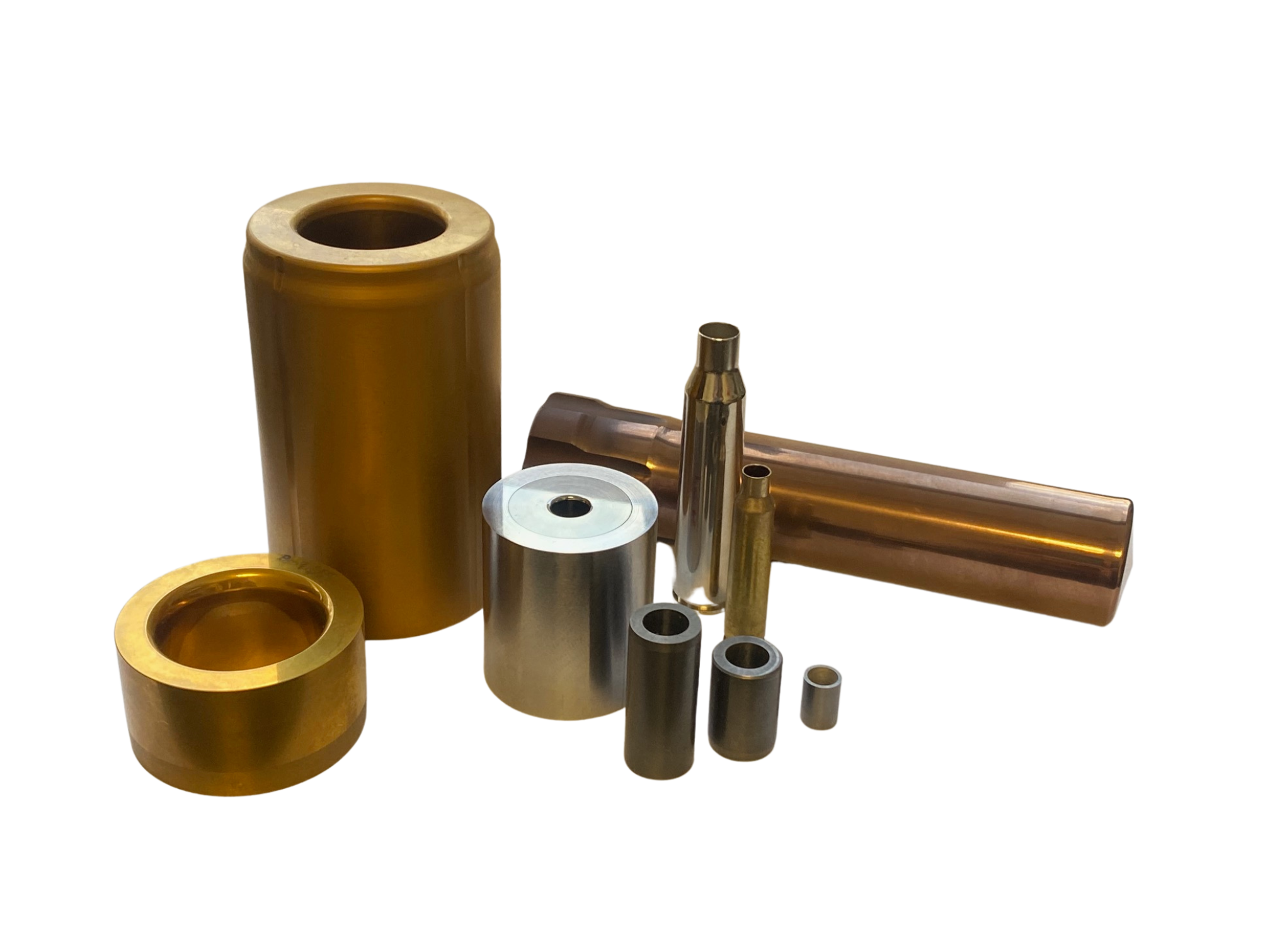


Hot forging shapes heated metal—often at temperatures between 1,500°F and 2,200°F—into durable, complex components. The extreme heat softens the material, allowing for better ductility, improved grain structure, and strong metallurgical performance. This makes hot forging ideal for larger structural components found in automotive, aerospace, agricultural, and industrial equipment.
Even with softer metal, hot forging puts immense stress on tooling. Many dies incorporate carbide inserts in key wear areas to maximize durability and maintain precision at high temperatures. Carbide’s resistance to abrasion and deformation makes it ideal for forging die inserts, trim dies, wear plates, and other components subjected to thermal and mechanical strain.
We produce custom carbide tooling designed to stay stable under heat and pressure—helping manufacturers improve uptime and reduce tooling costs. Contact us today to explore carbide inserts tailored to your forging applications.


Carbide inserts are useful because Sympathy Flowers they have great hardness, can resist wear, and stay the same shape even when things get tough during machining.In hot forging, where tools are exposed to high heat, pressure, and repeated hits, it's important to pick the right type of carbide and shape of the insert to keep the cutting working well and make the tool last longer.Using the right cooling methods and choosing inserts that fit the job are also key to getting good and consistent results.
ReplyDeleteSai Flower
Address: Shop No 1, Sai Mandir, Lodhi Rd, Gokalpuri, Institutional Area, Lodi Colony, New Delhi, Delhi 110003
Phone: 088020 04527