

Wednesday, April 15, 2026

How Precision Carbide Dies Deliver Measurable Manufacturing Gains

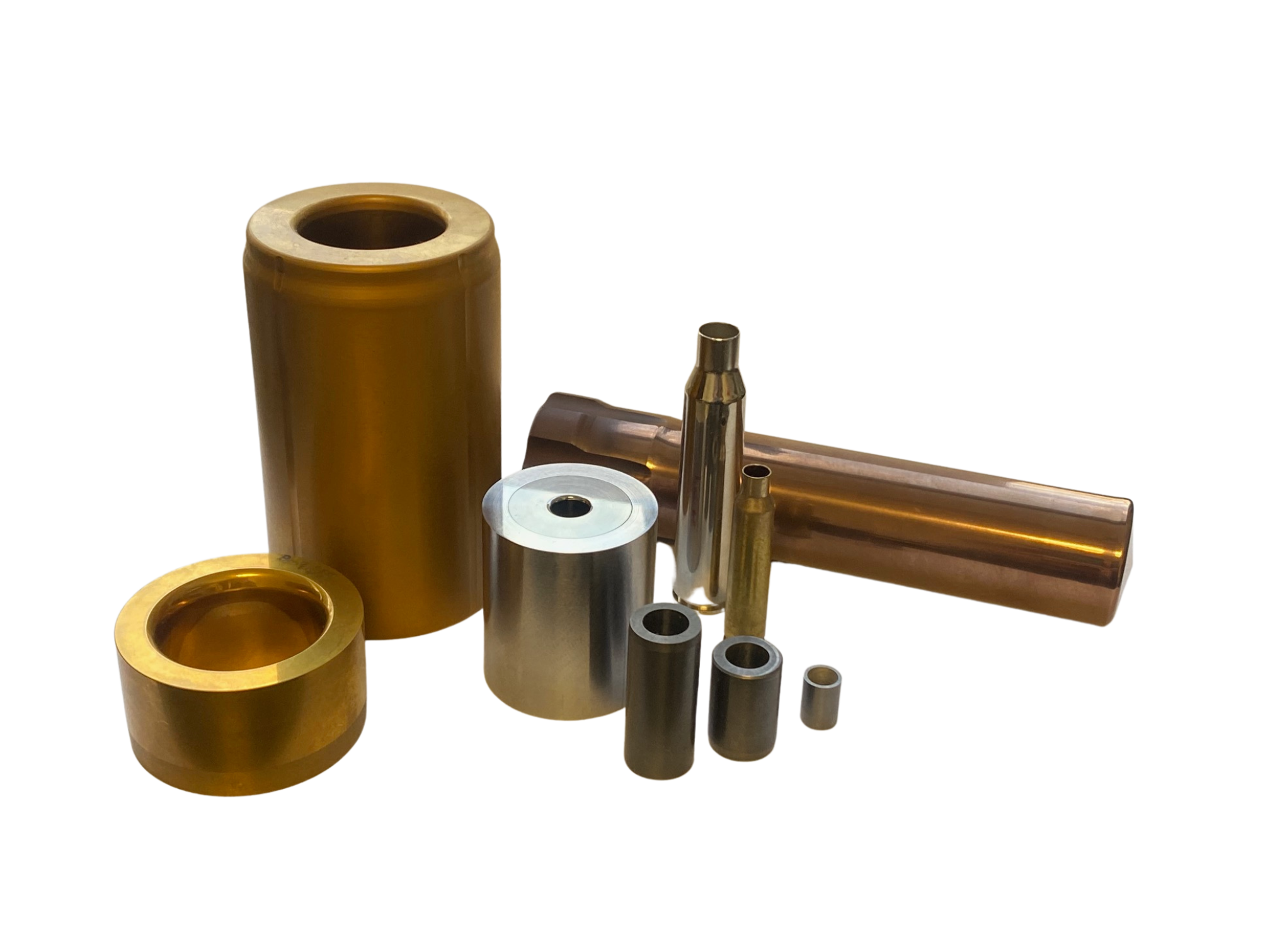
a variety of carbide dies

Tooling should support your production goals — not hold them back. In industries like wire drawing, fastener production, extrusion, and tube forming, steel dies often struggle under high pressure and continuous operation. Frequent replacements and inconsistent results create hidden costs that add up fast.

The solution? High-performance carbide dies engineered for longevity and precision.


What Makes Our Carbide Dies Different?


Not all carbide dies are created equal. Our approach focuses on four critical factors:


1. Material Integrity
We use premium-grade tungsten carbide with optimized grain structure to maximize wear resistance and compressive strength.


2. Precision Engineering
Advanced grinding and finishing ensure consistent product dimensions and improved surface finish.


3. Application-Specific Design
We analyze your material type, production speed, lubrication conditions, and volume demands before engineering your die.


4. Reduced Interruptions
Longer-lasting carbide dies dramatically decrease changeovers and unplanned downtime.


The Production Impact

When manufacturers switch to our carbide dies, they see:

  • Increased tool life
  • Improved schedule reliability
  • Higher machine uptime
  • Reduced scrap
  • Greater consistency across long production runs 

In competitive manufacturing environments, efficiency margins are slim. Tooling performance matters. If your current dies are limiting output, consistency, or profitability, the right carbide solution can change that. Read more on our website!


Let’s Engineer a Better Die


We’re ready to help you move from recurring production problems to measurable results.


Reach out today to discuss your carbide die needs and discover how precision engineering can elevate your production performance.

Wednesday, April 1, 2026

Are Your Carbide Dies Costing You Production?

carbide dies for production

In high-volume manufacturing, small inefficiencies multiply quickly. Tool wear accelerates. Downtime increases. Scrap piles up. What starts as a minor tooling issue can quietly erode productivity and profitability.

Many manufacturers begin with traditional steel tooling because of lower upfront costs. But steel dies often create long-term operational problems:

  • Premature wear under high pressure
  • Frequent changeovers
  • Dimensional inconsistencies
  • Surface finish issues
  • Increased scrap rates

The result? Interrupted production schedules, strained maintenance teams, and shrinking margins.


The Upgrade That Changes Everything

When manufacturers transition to precision-engineered carbide dies, the difference is measurable.


Our high-performance carbide dies are engineered for:

  • Extended tool life
  • Tight tolerance control
  • Superior wear resistance
  • Reduced downtime
  • Greater throughput 

We use premium-grade carbide with carefully controlled grain structures, ensuring maximum durability without sacrificing fracture toughness. Our precision grinding and finishing processes maintain dimensional accuracy throughout extended production runs.


Most importantly, we design every solution around your specific production environment — material type, speed, lubrication, and tolerance requirements.


The Results Speak for Themselves


Manufacturers who switch to our carbide dies report:

  • Dramatically longer tool life
  • Reduced maintenance interruptions
  • Improved surface finish
  • Lower scrap and rework
  • Increased overall equipment effectiveness (OEE)

In high-volume operations, small gains compound quickly. The right carbide dies don’t just replace existing tooling — they elevate your entire production process. Read more on our website!


Ready to Improve Production?


If tool wear and downtime are limiting your output, it may be time to upgrade your carbide dies.


Contact us today to discuss your application and discover how precision-engineered carbide dies can transform your production performance.

Sunday, March 15, 2026

Preventing Premature Failure in Carbide Dies: What Manufacturers Should Know

carbide dies

Premature carbide die failure is rarely caused by a single issue. More often, it results from a combination of factors—improper lubrication, debris buildup, thermal shock, or subtle handling damage that goes unnoticed until production quality suffers.

Routine cleaning and inspection play a critical role in extending die life. Metal fines and residual material can act as abrasives, while micro-chipping or surface cracking may signal the need for reconditioning before failure occurs. Just as important is avoiding sudden temperature changes and handling carbide dies with care to prevent invisible fractures.


With proactive inspections, clean lubrication systems, and timely reconditioning, manufacturers can restore performance and delay replacement. The right maintenance approach turns carbide dies into long-term production assets rather than recurring expenses.


👉 Explore the full guide for proven strategies to protect your tooling and production schedule.

Sunday, March 1, 2026

How Proper Maintenance Extends the Life of Carbide Dies

carbide dies

Carbide dies are engineered to withstand extreme pressure, friction, and repeated impact—but even the highest-quality tooling requires proactive care. Without proper maintenance, small issues like misalignment, contaminated lubrication, or improper handling can accelerate wear and lead to costly downtime.

A structured maintenance program helps manufacturers extend the usable life of carbide dies, maintain tight dimensional accuracy, and reduce emergency tooling replacements. Key best practices include proper installation and alignment, operating within recommended tonnage limits, and using the correct lubricant for each forming application.


By identifying wear patterns early and addressing issues before failure occurs, manufacturers can significantly improve uptime and protect their investment in carbide dies. Partnering with an experienced tooling manufacturer ensures that maintenance strategies align with real-world production demands.


👉 Read the full article to learn how preventive care maximizes performance and long-term value.


Sunday, February 15, 2026

Hot Forging and the Role of Carbide Inserts in High-Temperature Manufacturing

hot forging manufacturing

Hot forging shapes heated metal—often at temperatures between 1,500°F and 2,200°F—into durable, complex components. The extreme heat softens the material, allowing for better ductility, improved grain structure, and strong metallurgical performance. This makes hot forging ideal for larger structural components found in automotive, aerospace, agricultural, and industrial equipment.

Even with softer metal, hot forging puts immense stress on tooling. Many dies incorporate carbide inserts in key wear areas to maximize durability and maintain precision at high temperatures. Carbide’s resistance to abrasion and deformation makes it ideal for forging die inserts, trim dies, wear plates, and other components subjected to thermal and mechanical strain.


Read more on our website!


We produce custom carbide tooling designed to stay stable under heat and pressure—helping manufacturers improve uptime and reduce tooling costs. Contact us today to explore carbide inserts tailored to your forging applications.

Sunday, February 1, 2026

Cold Forming: Why Carbide Dies Make All the Difference

cold form dies

Cold forming, also known as cold heading, is one of the most efficient ways to produce high-volume metal parts with exceptional accuracy. Because the process shapes metal at or near room temperature, the material becomes stronger through strain hardening while maintaining a clean, consistent surface finish. This makes cold forming ideal for fasteners, bolts, and other precision components.

However, cold forming also places extreme pressure on tooling. That’s why manufacturers rely on carbide dies, specifically cold form dies, to withstand repeated high-force impacts without losing dimensional integrity. Carbide provides unmatched wear resistance and compressive strength, helping operations maintain accuracy even in demanding, high-speed environments.


Read more on our website!


We engineer precision cold form dies that deliver long tool life, reduced maintenance, and consistent part quality, cycle after cycle. Looking for custom tooling support? Our engineering team can help optimize your cold forming process. Get started today and request a quote!

Thursday, January 15, 2026

How Tungsten Carbide Sleeves and Bushings Improve Drilling Efficiency and Reduce Wear

tungsten carbide


Abrasive drilling mud acts like liquid sandpaper, constantly eroding the expensive components that keep drilling operations moving. That’s why operators turn to tungsten carbide wear parts—a proven solution for boosting performance and cutting downtime.

The Power of Tungsten Carbide

Manufactured by sintering tungsten carbide particles with a metal binder, this material delivers:

  • Exceptional abrasion resistance
  • High strength and stiffness under massive axial and torsional loads
  • Corrosion resistance in chemically aggressive environments


These properties make tungsten carbide ideal for protecting drill string components from constant, high-speed wear.


Where These Components Matter Most

  • Wear Sleeves prevent seal degradation, protect bearing assemblies, and maintain critical tolerances during continuous rotation.
  • Carbide Bushings ensure stable shaft alignment, reduce friction, and maintain dimensional integrity even in high-pressure, high-temperature scenarios.

Together, they help operators avoid premature equipment failure—and the high costs associated with lost time and replacements.


Read more on our website!

 
Ready to strengthen your drilling performance?


Raven Carbide Die delivers custom tungsten carbide sleeves, bushings, and wear-resistant components built to withstand the toughest downhole environments. Reach out today and discover how our precision manufacturing can help you improve efficiency and dramatically cut NPT.

How Precision Carbide Dies Deliver Measurable Manufacturing Gains

Tooling should support your production goals — not hold them back. In industries like wire drawing, fastener production, extrusion, and tube...