

Showing posts with label carbide tooling. Show all posts

Wednesday, April 15, 2026

How Precision Carbide Dies Deliver Measurable Manufacturing Gains

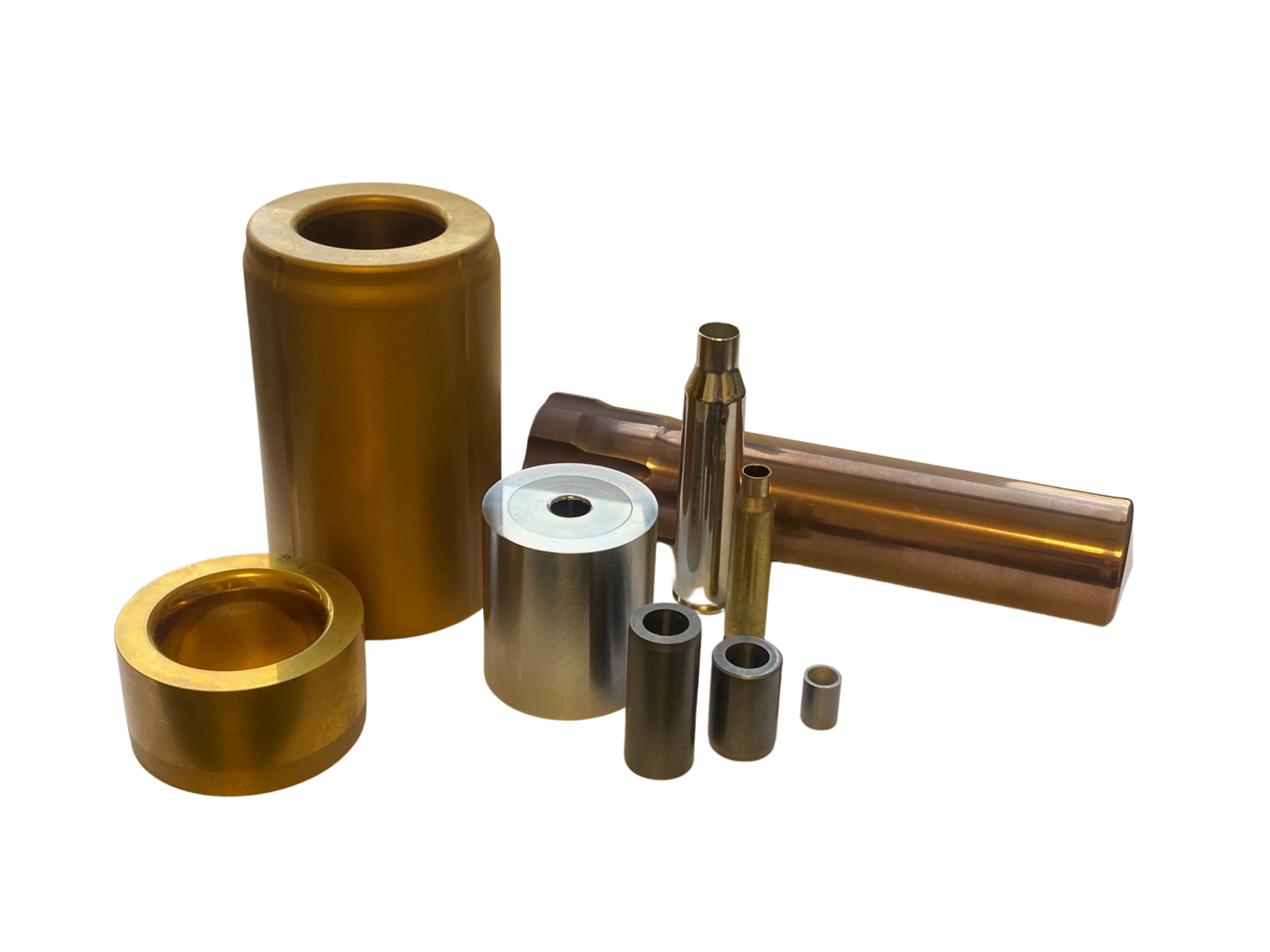
a variety of carbide dies

Tooling should support your production goals — not hold them back. In industries like wire drawing, fastener production, extrusion, and tube forming, steel dies often struggle under high pressure and continuous operation. Frequent replacements and inconsistent results create hidden costs that add up fast.

The solution? High-performance carbide dies engineered for longevity and precision.


What Makes Our Carbide Dies Different?


Not all carbide dies are created equal. Our approach focuses on four critical factors:


1. Material Integrity
We use premium-grade tungsten carbide with optimized grain structure to maximize wear resistance and compressive strength.


2. Precision Engineering
Advanced grinding and finishing ensure consistent product dimensions and improved surface finish.


3. Application-Specific Design
We analyze your material type, production speed, lubrication conditions, and volume demands before engineering your die.


4. Reduced Interruptions
Longer-lasting carbide dies dramatically decrease changeovers and unplanned downtime.


The Production Impact

When manufacturers switch to our carbide dies, they see:

  • Increased tool life
  • Improved schedule reliability
  • Higher machine uptime
  • Reduced scrap
  • Greater consistency across long production runs 

In competitive manufacturing environments, efficiency margins are slim. Tooling performance matters. If your current dies are limiting output, consistency, or profitability, the right carbide solution can change that. Read more on our website!


Let’s Engineer a Better Die


We’re ready to help you move from recurring production problems to measurable results.


Reach out today to discuss your carbide die needs and discover how precision engineering can elevate your production performance.

Wednesday, April 1, 2026

Are Your Carbide Dies Costing You Production?

carbide dies for production

In high-volume manufacturing, small inefficiencies multiply quickly. Tool wear accelerates. Downtime increases. Scrap piles up. What starts as a minor tooling issue can quietly erode productivity and profitability.

Many manufacturers begin with traditional steel tooling because of lower upfront costs. But steel dies often create long-term operational problems:

  • Premature wear under high pressure
  • Frequent changeovers
  • Dimensional inconsistencies
  • Surface finish issues
  • Increased scrap rates

The result? Interrupted production schedules, strained maintenance teams, and shrinking margins.


The Upgrade That Changes Everything

When manufacturers transition to precision-engineered carbide dies, the difference is measurable.


Our high-performance carbide dies are engineered for:

  • Extended tool life
  • Tight tolerance control
  • Superior wear resistance
  • Reduced downtime
  • Greater throughput 

We use premium-grade carbide with carefully controlled grain structures, ensuring maximum durability without sacrificing fracture toughness. Our precision grinding and finishing processes maintain dimensional accuracy throughout extended production runs.


Most importantly, we design every solution around your specific production environment — material type, speed, lubrication, and tolerance requirements.


The Results Speak for Themselves


Manufacturers who switch to our carbide dies report:

  • Dramatically longer tool life
  • Reduced maintenance interruptions
  • Improved surface finish
  • Lower scrap and rework
  • Increased overall equipment effectiveness (OEE)

In high-volume operations, small gains compound quickly. The right carbide dies don’t just replace existing tooling — they elevate your entire production process. Read more on our website!


Ready to Improve Production?


If tool wear and downtime are limiting your output, it may be time to upgrade your carbide dies.


Contact us today to discuss your application and discover how precision-engineered carbide dies can transform your production performance.

Sunday, March 15, 2026

Preventing Premature Failure in Carbide Dies: What Manufacturers Should Know

carbide dies

Premature carbide die failure is rarely caused by a single issue. More often, it results from a combination of factors—improper lubrication, debris buildup, thermal shock, or subtle handling damage that goes unnoticed until production quality suffers.

Routine cleaning and inspection play a critical role in extending die life. Metal fines and residual material can act as abrasives, while micro-chipping or surface cracking may signal the need for reconditioning before failure occurs. Just as important is avoiding sudden temperature changes and handling carbide dies with care to prevent invisible fractures.


With proactive inspections, clean lubrication systems, and timely reconditioning, manufacturers can restore performance and delay replacement. The right maintenance approach turns carbide dies into long-term production assets rather than recurring expenses.


👉 Explore the full guide for proven strategies to protect your tooling and production schedule.

Monday, December 15, 2025

Smarter Materials and Sustainable Processes in Carbide Tooling

carbide tooling

In 2026, advances in materials and sustainability are redefining carbide tooling. Nanograin and binderless tungsten carbide are leading the way with higher hardness, better heat resistance, and longer die life — critical for high-speed and cold-forming operations. Meanwhile, engineered multilayer coatings are being fine-tuned to meet specific thermal and friction demands, reducing wear and enabling higher cutting speeds.

On the process side, cryogenic cooling and minimum quantity lubrication (MQL) strategies are cutting heat, lowering tool wear, and improving surface finish — all while reducing environmental impact. Combined with better reconditioning and recycling of WC powders, the industry is embracing lifecycle thinking to reduce costs and waste.


The result? A smarter, cleaner, and more efficient approach to carbide tooling that improves both performance and sustainability.


Learn more about what’s next in carbide tooling for 2026 here.


Start Implementing What’s Next in Carbide Tooling with Raven Carbide Die


Stay ahead of the curve — contact Raven Carbide Die today to discover how new materials and processes can optimize your tooling performance in 2026 and beyond.

Monday, December 1, 2025

Additive Manufacturing and Smart Sensors: The Future of Carbide Tooling

carbide tooling equipment in a factory
The world of carbide tooling is changing fast. As manufacturers face higher expectations for precision, throughput, and cost control, new technologies are reshaping what’s possible. 

In 2026, additive manufacturing (AM) is moving from the lab to the production floor. Binder-jet and laser-based processes now make it possible to create complex tungsten-carbide geometries with internal cooling features and lightweight lattice structures — impossible with traditional pressing and grinding. These innovations mean faster design cycles, custom inserts, and on-demand spare parts.


At the same time, smart tooling and embedded sensors are transforming production lines. By tracking temperature, vibration, and strain in real time, AI-driven systems can predict tool wear before it causes downtime, ensuring consistent part quality and extending tool life.


Raven Carbide Die is watching these trends closely — and applying emerging technology to help manufacturers improve precision and productivity. Learn more about what’s next in carbide tooling for 2026 here.


Start Implementing What’s Next in Carbide Tooling with Raven Carbide Die


Want to see how these innovations could benefit your operation? Contact us today to explore the next generation of carbide tooling.

Tuesday, October 21, 2025

Avoiding Chipping and Cracking in Carbide Dies

carbide die

While carbide dies are built to withstand high pressure and heavy use, they can fail when subjected to improper handling or extreme conditions. Two of the most damaging issues are chipping and cracking.

Chipping


Chipping occurs when small pieces of carbide break off the die surface, often caused by misalignment, excessive shock loads, or rough handling.


Prevention tips:

  • Handle and store dies carefully.
  • Ensure proper alignment in tooling.
  • Avoid sudden impacts or loads beyond capacity. 

Cracking & Breakage


Cracks develop when a carbide die is exposed to severe stress, thermal shock, or improper installation. Once cracks form, the die becomes unsafe.


Prevention tips:

  • Prevent sudden temperature changes.
  • Install with proper fits and mounting techniques.
  • Stay within recommended operating limits.


Proactive maintenance and correct handling practices can help avoid these costly failures. Learn more about common carbide die failures and how to avoid them here.


👉 Ensure durability and precision in every application—contact us today to learn about long-lasting carbide die solutions.

Tuesday, October 7, 2025

How to Prevent Wear in Your Carbide Dies


Carbide dies are known for their exceptional hardness and durability, but like any tool, they aren’t indestructible. One of the most common causes of carbide die failure is wear. Over time, constant contact with hard or abrasive materials gradually erodes the die’s working surface. This increases clearances, reduces precision, and leads to inconsistent product quality.


How to Prevent Wear in Carbide Dies


  • Use proper lubrication to minimize friction and protect against surface damage.
  • Match die grade to the application so the die can handle the hardness and abrasiveness of the material.
  • Inspect regularly and recondition before wear becomes critical.


By identifying wear early and following these best practices, manufacturers can extend carbide die life and improve production efficiency. Learn more about common carbide die failures and how to avoid them here.


👉 Stop failures before they start—contact us today for custom carbide dies engineered to deliver long-lasting performance.

Thursday, December 15, 2022

Carbide Die Maker Humor 2022!

 Welcome to the latest instalment of the Carbide Die Blog humor section. Share this must see stuff with your tool and die shop buddies and any machinist fan!


new machine
When someone crashes the new machine.

Hand Wrench
Every handyman needs one!

 For all those tight tolerance tool and die guys... you all have worked with him.
Tight Tolerance
Tight Tolerance

Cats and dogs, night shift vs day shift... and of course machinist vs. engineer, these are the true rivals of the world!
Machinist Vs.
Machinists vs the world.

Not machinists, but close enough. Just make the wrench calipers.

Machine School
aka: Machinist School

And for all those of you who make carbide dies and tooling.. yet have to struggle explain it to the general public.
Carbide Dies Makers
The Die Maker at a party.

When the die shop owner needs something.


Machinists
Run all the machines please.

When your machines coolant lines are clogged have the new guy go grab the coolant snake!

Machine Snake
Machine Snake

When you start thinking maybe carbide dies would last longer that the old steel dies.

Carbide vs. Steel Dies
Carbide Dies vs Steel Dies

There's always one of these guys in every machine shop!

Tungsten Carbide
Tungsten Carbide Tools

Not really tool and die, but funny as hell!

Wood Chipper
When you get your used wood chipper from Fargo.

We need one of these at the die shop!
Tool Dog
Tool Dog!

Remember when they said we were all essential workers?
Machinists
Tool or Die.

The machinist in its natural habitat.

Machinist Garage
Machinists Garage


Thank you everyone! Looks like we are going to make it through 2022! We will be back with more Tool & Die humor next year!

Thursday, June 2, 2022

The Tungsten Carbide Industry, 2022

Tungsten Carbide


Tungsten Carbide is used to make a wide variety of goods. Things that you never see but that are incredibly necessary, literally and figuratively the nuts and bolts of our economy.What is the state of the Tungsten Carbide Industry in 2020? It's a bit shaky, but honestly could be a lot worse. Costs have risen considerably (5% to 30%) and lead times on deliveries have been stretched but at least supplies are still flowing and production of items like carbide dies, tooling and bushings have not been severely interrupted. Lets take a closer look at the current market for the ingredients of tungsten carbide, the elements of tungsten and cobalt.

Tungsten Supply 2020

In 2022 China produced the most tungsten by far, however, they are currently in a trade war with the US, increasing the cost of tungsten carbide imports. Also, notably high on the list is Russia who are currently being sanctioned by a large number of countries do to their invasion of Ukraine. Furthermore, over 1200 companies have decided to quit doing business with Russia, sighting Russian war crimes and their predatory foreign policy. New mines are currently underway in South Africa and Vietnam. 

Tungsten Production by Country
(in metric tons)
China: 66,000
Vietnam: 4,500
Russia: 2,400
Bolivia: 1,400
Rwanda:  950
Austria: 900
Spain: 900
Portugal: 600
N. Korea: 400
All Other Countries: 1,200


Cobalt Supply 2020

The second ingredient to tungsten carbide is the binder, cobalt. This hard lustrous metal is a byproduct of mining nickel, lead and iron. In 2022 worldwide production came to 170,000 metric tons.

The Democratic Republic of Congo is by far the largest cobalt producers and makes up a larger proportion of the DRC's income from exports. They produce a full 2/3rds of global production and have both the largest mine and biggest reserves, estimated at 1.4 million metric tons.

Cobalt Production by Country
(in metric tons)

Democratic Republic of Congo: 100,000
Russia: 6,100
Australia: 5,100
Philippines: 4,600
Cuba: 3,500
Madagascar: 3,300
Papua New Guinea: 3,100
Canada: 3,000


Friday, March 19, 2021

What is Cemented Carbide?


Cemented carbide is an extremely hard material used in industrial applications, typically to

Cemented Carbide Dies

form metals like steel, aluminum and brass. Since carbide is so hard, it’s a very good material to fashion cutting tools as well, again, usually to cut metals, and is around three times harder and twice as dense as steel. Cemented carbide, also called tungsten carbide, is a chemical compound consisting of fine particles of carbide cemented by a binder metal, typically cobalt although titanium, tantalum and nickel can also be added to get different properties.

Cemented carbide is used to make superior products in high wear applications. Carbide Dies last many times longer than steal dies under heavy impact and heavy wear conditions. While carbide punches can stand up to a beating that would deform their steel counterparts. Another example is that carbide drill bushings typically last over ten times as long as steel bushings.

There are also advantages to working with a carbide cutter. Carbide cutters typically leave a better surface finish and allow for faster machining. 

For all cemented carbides additional strengths they do have a few down sides, for one,  carbide tools are more expensive due to additional effort the involved with forming the harder material. The most common way to shape cemented carbide is to use diamond grinding wheels. Cemented carbide tools are also more brittle than typical tools. To combat this, the cutting tip of the tool is often a small carbide insert mounted or soldered onto a steel shank or cutter. 

Cemented carbide has been used in a wide variety of industries due to its extreme wear properties, everything from medical to mining. For example cemented carbide is used extensively in the global steel industry. Since the 1960’s steel mills have used cemented carbide for the rolls of their mills. Other industrial applications of carbide include automotive components, drawing tools, rotary cutters, forming dies, rings, bushings and many more. 


History of Cemented Carbide
Cemented carbide was first developed in Germany during the 1920s, sintered tungsten carbide was developed by a group called the Osram Study Society for Electrical Lighting. However, since they didn’t have the equipment to take advantage of this material, Osram sold the license to the sinister Krupp Company in 1925. In 1926, carbide hit the market under the name WIDIA (like diamond) and was also known by the cool name of Wolfram. Since then cemented carbide, often called tungsten carbide (although this is a more specific term), has proliferated in many industries and as components in machinery. We can expect the uses and production of cemented carbide tooling to continue long into the future.


How Precision Carbide Dies Deliver Measurable Manufacturing Gains

Tooling should support your production goals — not hold them back. In industries like wire drawing, fastener production, extrusion, and tube...