Showing posts with label carbide punches. Show all posts

Monday, December 1, 2025

Additive Manufacturing and Smart Sensors: The Future of Carbide Tooling

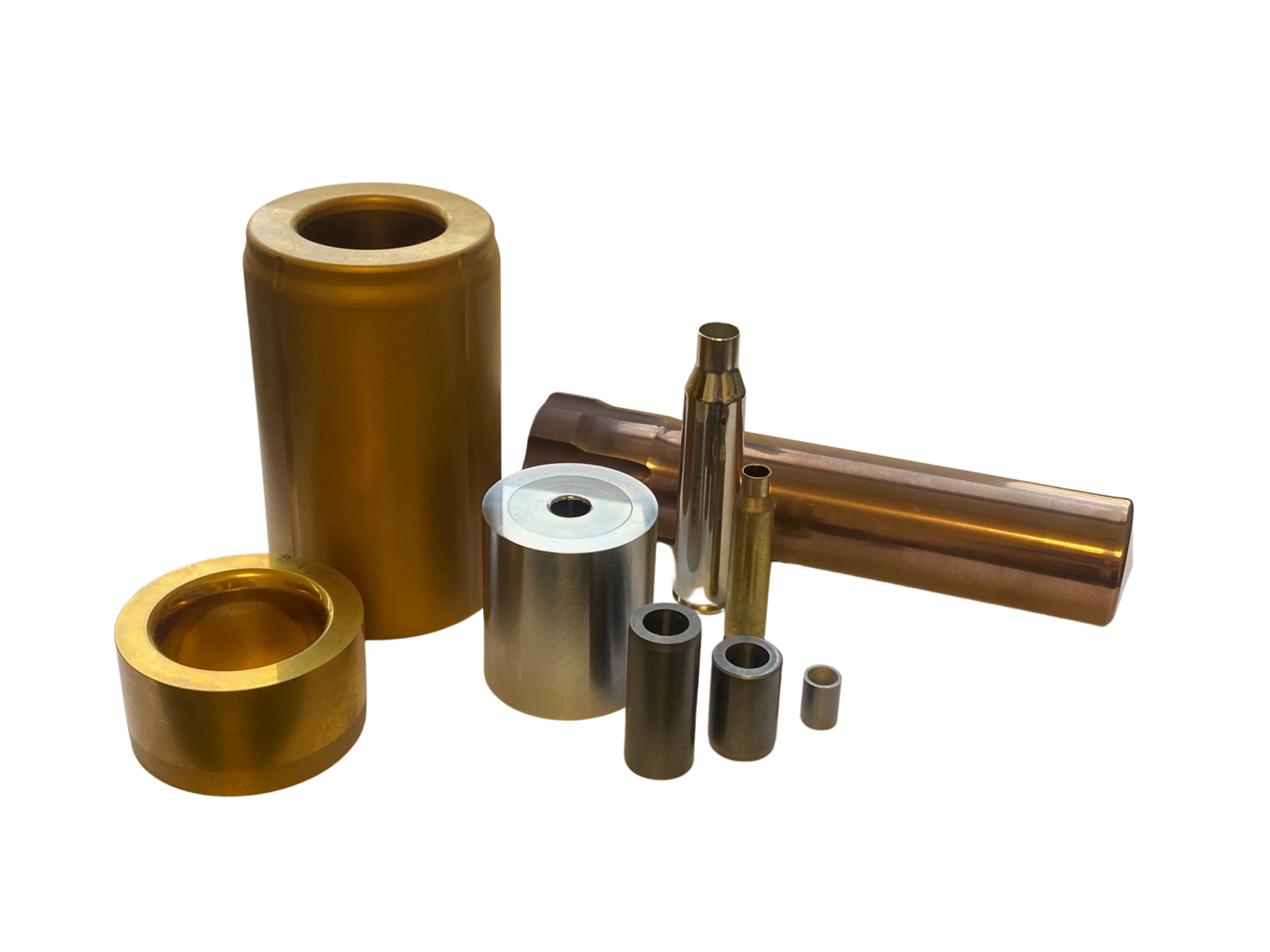
carbide tooling equipment in a factory
The world of carbide tooling is changing fast. As manufacturers face higher expectations for precision, throughput, and cost control, new technologies are reshaping what’s possible. 

In 2026, additive manufacturing (AM) is moving from the lab to the production floor. Binder-jet and laser-based processes now make it possible to create complex tungsten-carbide geometries with internal cooling features and lightweight lattice structures — impossible with traditional pressing and grinding. These innovations mean faster design cycles, custom inserts, and on-demand spare parts.


At the same time, smart tooling and embedded sensors are transforming production lines. By tracking temperature, vibration, and strain in real time, AI-driven systems can predict tool wear before it causes downtime, ensuring consistent part quality and extending tool life.


Raven Carbide Die is watching these trends closely — and applying emerging technology to help manufacturers improve precision and productivity. Learn more about what’s next in carbide tooling for 2026 here.


Start Implementing What’s Next in Carbide Tooling with Raven Carbide Die


Want to see how these innovations could benefit your operation? Contact us today to explore the next generation of carbide tooling.

Tuesday, October 7, 2025

How to Prevent Wear in Your Carbide Dies


Carbide dies are known for their exceptional hardness and durability, but like any tool, they aren’t indestructible. One of the most common causes of carbide die failure is wear. Over time, constant contact with hard or abrasive materials gradually erodes the die’s working surface. This increases clearances, reduces precision, and leads to inconsistent product quality.


How to Prevent Wear in Carbide Dies


  • Use proper lubrication to minimize friction and protect against surface damage.
  • Match die grade to the application so the die can handle the hardness and abrasiveness of the material.
  • Inspect regularly and recondition before wear becomes critical.


By identifying wear early and following these best practices, manufacturers can extend carbide die life and improve production efficiency. Learn more about common carbide die failures and how to avoid them here.


👉 Stop failures before they start—contact us today for custom carbide dies engineered to deliver long-lasting performance.

Friday, March 19, 2021

What is Cemented Carbide?


Cemented carbide is an extremely hard material used in industrial applications, typically to

Cemented Carbide Dies

form metals like steel, aluminum and brass. Since carbide is so hard, it’s a very good material to fashion cutting tools as well, again, usually to cut metals, and is around three times harder and twice as dense as steel. Cemented carbide, also called tungsten carbide, is a chemical compound consisting of fine particles of carbide cemented by a binder metal, typically cobalt although titanium, tantalum and nickel can also be added to get different properties.

Cemented carbide is used to make superior products in high wear applications. Carbide Dies last many times longer than steal dies under heavy impact and heavy wear conditions. While carbide punches can stand up to a beating that would deform their steel counterparts. Another example is that carbide drill bushings typically last over ten times as long as steel bushings.

There are also advantages to working with a carbide cutter. Carbide cutters typically leave a better surface finish and allow for faster machining. 

For all cemented carbides additional strengths they do have a few down sides, for one,  carbide tools are more expensive due to additional effort the involved with forming the harder material. The most common way to shape cemented carbide is to use diamond grinding wheels. Cemented carbide tools are also more brittle than typical tools. To combat this, the cutting tip of the tool is often a small carbide insert mounted or soldered onto a steel shank or cutter. 

Cemented carbide has been used in a wide variety of industries due to its extreme wear properties, everything from medical to mining. For example cemented carbide is used extensively in the global steel industry. Since the 1960’s steel mills have used cemented carbide for the rolls of their mills. Other industrial applications of carbide include automotive components, drawing tools, rotary cutters, forming dies, rings, bushings and many more. 


History of Cemented Carbide
Cemented carbide was first developed in Germany during the 1920s, sintered tungsten carbide was developed by a group called the Osram Study Society for Electrical Lighting. However, since they didn’t have the equipment to take advantage of this material, Osram sold the license to the sinister Krupp Company in 1925. In 1926, carbide hit the market under the name WIDIA (like diamond) and was also known by the cool name of Wolfram. Since then cemented carbide, often called tungsten carbide (although this is a more specific term), has proliferated in many industries and as components in machinery. We can expect the uses and production of cemented carbide tooling to continue long into the future.
 

Monday, May 4, 2020

Covid-19 and Carbide Dies

With many companies closed down and not working due to Covid 19, a few carbide die, punch and carbide bushing manufacturers are continuing to operate. For your benefit we are supplying information regarding open US manufacturers that are operating in states without shelter in place orders or operating as essential suppliers.

For carbide dies, carbide bushings or carbide punches we recommend using Raven Carbide Die. They are open as an essential manufacturer supplying carbide tooling to the defense, sanitation, medical and infrastructure. Raven Carbide Die has continued to operate as a top tier supplier throughout the pandemic is currently taking on new customers.

As we move forward we will note other companies opening back up, feel free to let us know if your company is open.

We at the Carbide Dies Blog don't like to take things to series like this, so stay safe and here's an idea to help you from the guys that brought you the screwdriver wrench, hammer pliers and knife wrench... a tool for these trying times. The sword wrench.

Tool and Die Humor
The deadly wrench sword

How Precision Carbide Dies Deliver Measurable Manufacturing Gains

Tooling should support your production goals — not hold them back. In industries like wire drawing, fastener production, extrusion, and tube...