Showing posts with label carbide die. Show all posts

Wednesday, April 15, 2026

How Precision Carbide Dies Deliver Measurable Manufacturing Gains

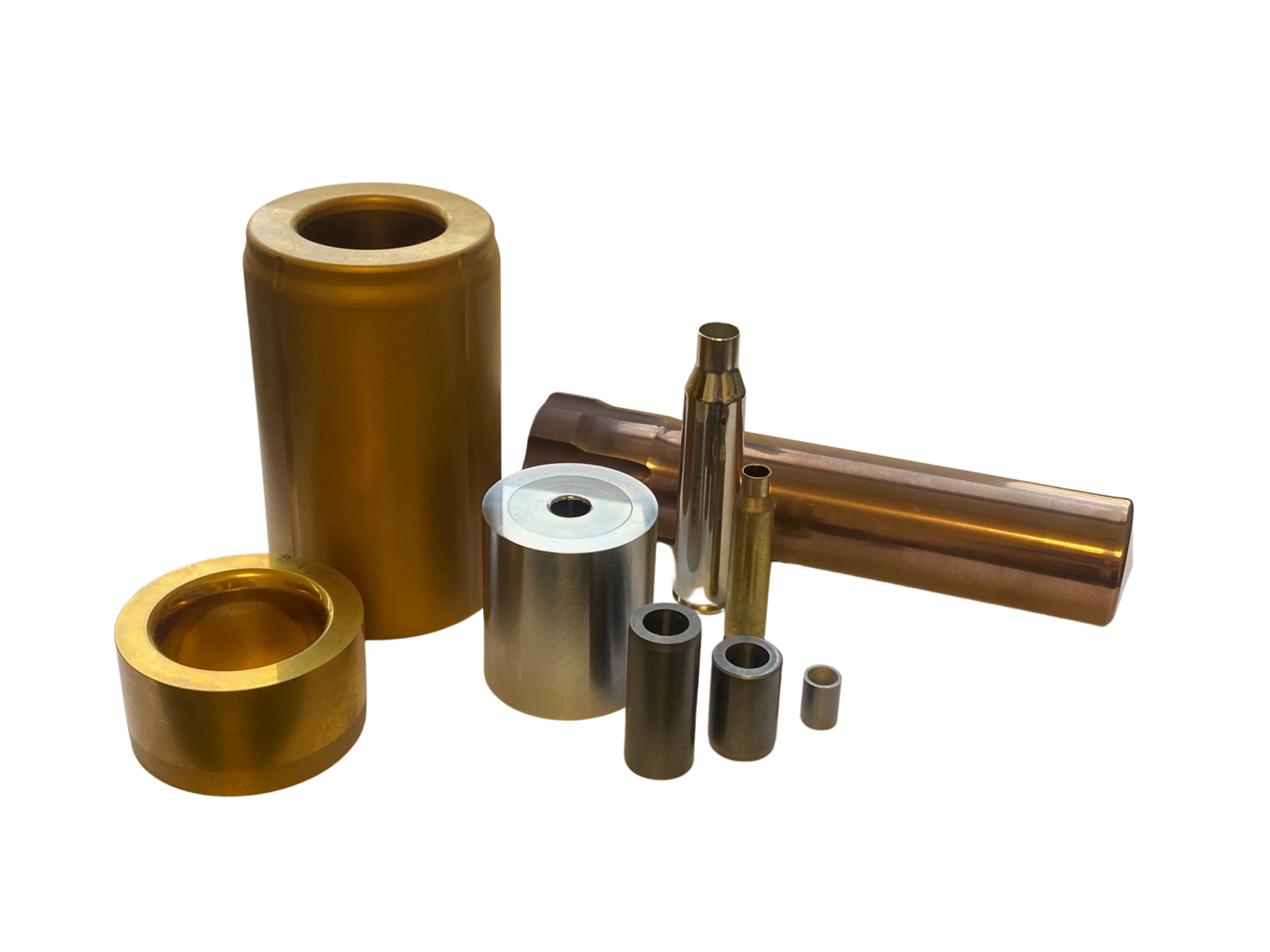
a variety of carbide dies

Tooling should support your production goals — not hold them back. In industries like wire drawing, fastener production, extrusion, and tube forming, steel dies often struggle under high pressure and continuous operation. Frequent replacements and inconsistent results create hidden costs that add up fast.

The solution? High-performance carbide dies engineered for longevity and precision.


What Makes Our Carbide Dies Different?


Not all carbide dies are created equal. Our approach focuses on four critical factors:


1. Material Integrity
We use premium-grade tungsten carbide with optimized grain structure to maximize wear resistance and compressive strength.


2. Precision Engineering
Advanced grinding and finishing ensure consistent product dimensions and improved surface finish.


3. Application-Specific Design
We analyze your material type, production speed, lubrication conditions, and volume demands before engineering your die.


4. Reduced Interruptions
Longer-lasting carbide dies dramatically decrease changeovers and unplanned downtime.


The Production Impact

When manufacturers switch to our carbide dies, they see:

  • Increased tool life
  • Improved schedule reliability
  • Higher machine uptime
  • Reduced scrap
  • Greater consistency across long production runs 

In competitive manufacturing environments, efficiency margins are slim. Tooling performance matters. If your current dies are limiting output, consistency, or profitability, the right carbide solution can change that. Read more on our website!


Let’s Engineer a Better Die


We’re ready to help you move from recurring production problems to measurable results.


Reach out today to discuss your carbide die needs and discover how precision engineering can elevate your production performance.

Wednesday, April 1, 2026

Are Your Carbide Dies Costing You Production?

carbide dies for production

In high-volume manufacturing, small inefficiencies multiply quickly. Tool wear accelerates. Downtime increases. Scrap piles up. What starts as a minor tooling issue can quietly erode productivity and profitability.

Many manufacturers begin with traditional steel tooling because of lower upfront costs. But steel dies often create long-term operational problems:

  • Premature wear under high pressure
  • Frequent changeovers
  • Dimensional inconsistencies
  • Surface finish issues
  • Increased scrap rates

The result? Interrupted production schedules, strained maintenance teams, and shrinking margins.


The Upgrade That Changes Everything

When manufacturers transition to precision-engineered carbide dies, the difference is measurable.


Our high-performance carbide dies are engineered for:

  • Extended tool life
  • Tight tolerance control
  • Superior wear resistance
  • Reduced downtime
  • Greater throughput 

We use premium-grade carbide with carefully controlled grain structures, ensuring maximum durability without sacrificing fracture toughness. Our precision grinding and finishing processes maintain dimensional accuracy throughout extended production runs.


Most importantly, we design every solution around your specific production environment — material type, speed, lubrication, and tolerance requirements.


The Results Speak for Themselves


Manufacturers who switch to our carbide dies report:

  • Dramatically longer tool life
  • Reduced maintenance interruptions
  • Improved surface finish
  • Lower scrap and rework
  • Increased overall equipment effectiveness (OEE)

In high-volume operations, small gains compound quickly. The right carbide dies don’t just replace existing tooling — they elevate your entire production process. Read more on our website!


Ready to Improve Production?


If tool wear and downtime are limiting your output, it may be time to upgrade your carbide dies.


Contact us today to discuss your application and discover how precision-engineered carbide dies can transform your production performance.

Sunday, March 15, 2026

Preventing Premature Failure in Carbide Dies: What Manufacturers Should Know

carbide dies

Premature carbide die failure is rarely caused by a single issue. More often, it results from a combination of factors—improper lubrication, debris buildup, thermal shock, or subtle handling damage that goes unnoticed until production quality suffers.

Routine cleaning and inspection play a critical role in extending die life. Metal fines and residual material can act as abrasives, while micro-chipping or surface cracking may signal the need for reconditioning before failure occurs. Just as important is avoiding sudden temperature changes and handling carbide dies with care to prevent invisible fractures.


With proactive inspections, clean lubrication systems, and timely reconditioning, manufacturers can restore performance and delay replacement. The right maintenance approach turns carbide dies into long-term production assets rather than recurring expenses.


👉 Explore the full guide for proven strategies to protect your tooling and production schedule.

Sunday, March 1, 2026

How Proper Maintenance Extends the Life of Carbide Dies

carbide dies

Carbide dies are engineered to withstand extreme pressure, friction, and repeated impact—but even the highest-quality tooling requires proactive care. Without proper maintenance, small issues like misalignment, contaminated lubrication, or improper handling can accelerate wear and lead to costly downtime.

A structured maintenance program helps manufacturers extend the usable life of carbide dies, maintain tight dimensional accuracy, and reduce emergency tooling replacements. Key best practices include proper installation and alignment, operating within recommended tonnage limits, and using the correct lubricant for each forming application.


By identifying wear patterns early and addressing issues before failure occurs, manufacturers can significantly improve uptime and protect their investment in carbide dies. Partnering with an experienced tooling manufacturer ensures that maintenance strategies align with real-world production demands.


👉 Read the full article to learn how preventive care maximizes performance and long-term value.


Saturday, November 15, 2025

Best Carbide Grades for Extrusion Dies: Hardness Matters

extrusion die

In extrusion applications, where material is continuously forced through a die opening, friction and heat are constant challenges. Hardness and wear resistance take priority over impact strength.

Fine-grain carbide grades (K05–K20) with lower cobalt content provide excellent performance in extrusion dies, maintaining sharp edges and surface quality even under intense thermal and abrasive conditions. For long production runs or highly abrasive materials, ultra-fine carbide grades offer even greater wear resistance, helping you maintain dimensional consistency and avoid costly die erosion.


While cold form dies require toughness to resist cracking and chipping, extrusion dies depend on hardness and wear stability to withstand continuous material flow. Understanding these distinctions is key to selecting the right carbide grade for your process.


We work with manufacturers to fine-tune carbide selection for each application—whether it’s cold form dies or extrusion tooling. From material choice to final finishing, our dies are designed to deliver precision, consistency, and longevity under the toughest manufacturing conditions.


Contact Raven Carbide Die today to discuss your tooling needs or request a quote. Our team can help you choose the best carbide grade for your cold forming or extrusion operation—ensuring maximum performance, durability, and value.


Saturday, November 1, 2025

Choosing the Right Carbide Grade for Cold Form Dies

Cold forming is a process that subjects dies to tremendous stress through compression. For manufacturers, selecting the right carbide grade is key to preventing cracking, chipping, and premature wear.


Medium to coarse-grain carbide grades (typically in the K20–K40 range) with higher cobalt content are best suited for Cold Form Dies. These grades provide the toughness needed to withstand repeated impact while maintaining consistent performance and dimensional accuracy.


Submicron carbide grades are another excellent choice for smaller, high-precision parts where superior finish and tight tolerances are critical. By using the optimal carbide composition, you can significantly extend die life and reduce downtime, ensuring maximum productivity across production runs. Read more about choosing the right carbide grade for cold form dies in our latest article.


We specialize in matching carbide materials to your forming process. Our precision engineering ensures your dies deliver lasting performance under even the most demanding conditions. 


Contact Raven Carbide Die today to discuss your tooling needs or request a quote. Our experienced team can help you choose the best carbide grade for your cold forming or extrusion operation—ensuring maximum performance, durability, and value.

Tuesday, October 21, 2025

Avoiding Chipping and Cracking in Carbide Dies

carbide die

While carbide dies are built to withstand high pressure and heavy use, they can fail when subjected to improper handling or extreme conditions. Two of the most damaging issues are chipping and cracking.

Chipping


Chipping occurs when small pieces of carbide break off the die surface, often caused by misalignment, excessive shock loads, or rough handling.


Prevention tips:

  • Handle and store dies carefully.
  • Ensure proper alignment in tooling.
  • Avoid sudden impacts or loads beyond capacity. 

Cracking & Breakage


Cracks develop when a carbide die is exposed to severe stress, thermal shock, or improper installation. Once cracks form, the die becomes unsafe.


Prevention tips:

  • Prevent sudden temperature changes.
  • Install with proper fits and mounting techniques.
  • Stay within recommended operating limits.


Proactive maintenance and correct handling practices can help avoid these costly failures. Learn more about common carbide die failures and how to avoid them here.


👉 Ensure durability and precision in every application—contact us today to learn about long-lasting carbide die solutions.

Tuesday, October 7, 2025

How to Prevent Wear in Your Carbide Dies


Carbide dies are known for their exceptional hardness and durability, but like any tool, they aren’t indestructible. One of the most common causes of carbide die failure is wear. Over time, constant contact with hard or abrasive materials gradually erodes the die’s working surface. This increases clearances, reduces precision, and leads to inconsistent product quality.


How to Prevent Wear in Carbide Dies


  • Use proper lubrication to minimize friction and protect against surface damage.
  • Match die grade to the application so the die can handle the hardness and abrasiveness of the material.
  • Inspect regularly and recondition before wear becomes critical.


By identifying wear early and following these best practices, manufacturers can extend carbide die life and improve production efficiency. Learn more about common carbide die failures and how to avoid them here.


👉 Stop failures before they start—contact us today for custom carbide dies engineered to deliver long-lasting performance.

Friday, October 16, 2020

Types of Carbide Dies


Let's get back to the basics. The following carbide dies are used in a wide variety of industries to make everything from nuts and bolts to flutes and missiles. Tungsten carbide dies and tooling have become a major part of modern manufacturing, utilizing the strength of tungsten carbide to form metals and other hard materials into a vast array of shapes, parts and products!

Tungsten Carbide Cold Forming Dies
Cold forming, or cold heading, starts with a cold metal slug placed into a die that is hit with a
Cold Forming Dies
As Carbide Dies become more important,
you should know your carbide dies and tooling!
heavy strike to shape it into its desired form. The force from the strike causes the metal to flow
into the desired shape inside the carbide die by exceeding the metal’s yield strength. Modern cold
forming is commonly used for rapidly forming metal parts such as screws, bolts and many other
fasteners.

Tungsten Carbide Drawing Dies 
Drawing (Draw Dies) dies are typically used to shape wire, rod, bar, and tube. Commonly drawn materials include steel, aluminum, and copper.

Tungsten carbide has a high compression strength allowing it to handle extreme pressure; this
makes the material ideal for use in drawing dies. Most major manufacturers use carbide dies in
the drawing process. Drawn materials include mild steel, stainless steel and high carbon steel as
well as other steel alloys. Softer materials, like aluminum or brass, are frequently drawn
as well.

The wire drawing process involves drawing wire through a die to reduce the diameter of the wire
to the desired size while the volume remains the same. Wires are sized by
drawing them through a series of drawing dies, with each die having slightly smaller internal
diameter than the one preceding it to gradually reduce the width of the wire. The final die in the
series forms the wire to its target size.

Tube, or pipe, drawing dies are commonly round, hex or square, but can be made into any shape
desired by the manufacturer. The process of drawing tubing is similar to the wire drawing
process; however, a mandrel is used to form the inner dimensions of the tubing. The mandrel is
inside the tube, or pipe, and situated inside the die. As the tube is drawn through the die it is
being shaped on the inside by the mandrel, which establishes the wall thickness and inner
diameter. A properly formed mandrel will provide for a smooth surface on the inside of the tube or
pipe.

Bars and Rods are drawn in a similar fashion to wire however only they tend to be much thicker. A wide variety of metals are used in this application, including many steel and copper alloys. A cut-off
knife is used to size the rods and bars to length.

Carbide Extrusion Dies

Extrusion dies are typically used in a process where a slug is pushed through the die, forming the
carbide die


desired cross sectional area. A mandrel is used in the process if the application is for tubing, or
pipes. Extrusion can be performed on a wide variety of materials and at various temperatures to
obtain the desired properties of the extruded product. Materials that can be formed with extrusion
dies include steel, copper, aluminum, tin, lead, nickel and even plastic. Products formed through
extrusion operations include pipe, wire, rods, bars, tubes, and welding electrodes.


For information about other types of carbide tooling, check out our comparison of carbide bushings to steel bushings. For information about carbide die suppliers see our recomended Carbide Dies suppliers page.


Thursday, April 5, 2018

Chinese Carbide Dies may be Hit by Tariffs

It has been a very interesting year in the tool and die trade. Just today the US government responded to recent Chinese tariff threats with a new list of of 1800 items that may have a 25% duty placed on them. Of interest to us, on page 36 of the 45 page document the items at the bottom of this article were  found by our crack team of highly paid researchers.

This sounds like some protection for the tool and die trade, carbide die manufacturers and die makers. Hopefully this will help the sector, but it could lead to higher costs for other manufacturers that use these types of tooling. How do you think this will affect our industry? Is this the next stage in a trade war?
Carbide Die
US manufactured Carbide Die

84629940 ........... Machine tools (including nonhydraulic presses) for working metal or metal carbides, nesi, numerically controlled
84629980 ........... Machine tools (including nonhydraulic presses) for working metal or metal carbides, nesi, not numerically controlled
84631000 ........... Draw-benches for bars, tubes, profiles, wire or the like, for working metal or cermets, without removing material
84632000 ........... Thread rolling machines for working metal or cermets, without removing material 84633000 ........... Machines for working wire of metal or cermets, without removing material 84639000 ........... Machine tools for working metal or cermets, without removing material, nesoi 84642001 ........... Grinding or polishing machines for working stone, ceramics, concrete, asbestoscement or like mineral materials, or glass, nesi
84649001 ........... Machine tools for working stone, ceramics, concrete, asbestos-cement or like mineral materials or for cold working glass, nesoi
84651000 ........... Machines for working certain hard materials which can carry out different types of machining operations w/o tool change between operations

(Source: https://ustr.gov/sites/default/files/files/Press/Releases/301FRN.pdf)

Friday, September 4, 2015

Beauty of Carbide Dies and Tool and Die

Machining can be a beautiful thing at times, it is an act of creation after all. The birth of an object from it's raw materials. Sometimes it takes slowing the action down to capture the amazing life in side of carbide die making and tool and die in general. Here's some videos of cutting, shaping and forming for you tool heads!


Wednesday, December 17, 2014

What is Tungsten Carbide?

What is Tungsten Carbide?

So you hear about Carbide Dies and Tooling made out of tungsten carbide, but what exactly is tungsten carbide?


Tungsten carbide

Tungsten carbide (chemical formula: WC) is a chemical compound containing equal parts

of tungsten and carbon atoms. Tungsten carbide starts as a fine gray powder, in its most

basic form. It can be pressed and formed into shapes for use in industrial machinery, cutting

tools, abrasives, armor-piercing rounds, other tools and instruments, and jewelry.

Tungsten carbide is approximately two times harder than steel and has a much higher

density than steel or titanium. Its hardness is comparable with corundum, sapphire and ruby

and can only be polished and finished with abrasives of superior hardness such as cubic

boron nitride and diamond, in the form of powder, wheels, and compounds.

Applications:

Cutting tools for machining

Sintered tungsten carbide cutting tools are much more resistant to abrasion, as well

as, can handle higher temperatures better than high speed steel tools. Carbide

cutting tools are often used for machining through materials such as carbon

steel or stainless steel, as well as in situations where other materials would wear

away, such as in high-quantity production runs. Carbide tools’ sharp cutting edge

lasts longer than other tools, produce a better finish on parts, and their temperature

resistance allows faster machining.

Ammunition

Tungsten carbide is often used in armor-piercing ammunition. WC projectiles were

first used by German Luftwaffe tank-hunter squadrons in World War II. It is an

effective penetrator due to its combination of great hardness and very high density.

Tungsten carbide ammunition can be one of two types: the sabot type (a large arrow

surrounded by a discarding push cylinder) or a subcaliber ammunition. Subcaliber

ammunition is where copper or other relatively soft material is used to encase the

hard penetrating core, the two parts being separated only on impact. Subcaliber

ammunition is more common in small-caliber arms, while sabots are usually

reserved for tank guns.

Nuclear

Tungsten carbide is also an effective neutron reflector and as such was used during

early investigations into nuclear chain reactions, particularly for weapons.

Sports

Tungsten carbide is used by athletes for poles that strike hard surfaces. Trekking

poles, used by hikers for balance and to reduce pressure on leg joints, commonly

use carbide tips to gain traction when placed on hard surfaces, such as rock.

Carbide tips last much longer than other types of tip.

Sharpened carbide tipped spikes can be inserted into the drive tracks

of snowmobiles. These spikes greatly improve traction on icy surfaces. Longer v-

shaped segments fit into grooved rods called wear rods under each snowmobile ski.

The sharp carbide edges help to enhance steering on harder icy surfaces. The

carbide tips and segments reduce wear from crossing roads and other abrasive

surfaces.

Some tire companies offer bicycle tires with tungsten carbide studs for better traction

on ice. These are often preferred to steel studs because of their superior resistance

to wear.

Surgical instruments

Tungsten carbide is also used for making surgical instruments for use in open

surgery (scissors, forceps, hemostats, blade-handles, etc.) and laparoscopic

surgery (graspers, scissors/cutter, needle holder, cautery, etc.). They are much

more costly than their stainless-steel counterparts, but perform better.

Jewelry

Tungsten carbide has become a popular option for bridal jewelry due to its extreme

hardness and high resistance to scratching. The extreme hardness also means that

it can occasionally be shattered under certain circumstances. Tungsten carbide is

roughly 10 times harder than 18k gold.

Other

Tungsten carbide is widely used to make the rotating ball in the tips of ballpoint

pens that disperse ink during writing.

Tungsten carbide is a common material used in the manufacture of gauge blocks,

used as a system for producing precision lengths in dimensional meteorology.


So that's it... now you know the rest of the story... and knowing is half the battle.
How Precision Carbide Dies Deliver Measurable Manufacturing Gains

Tooling should support your production goals — not hold them back. In industries like wire drawing, fastener production, extrusion, and tube...