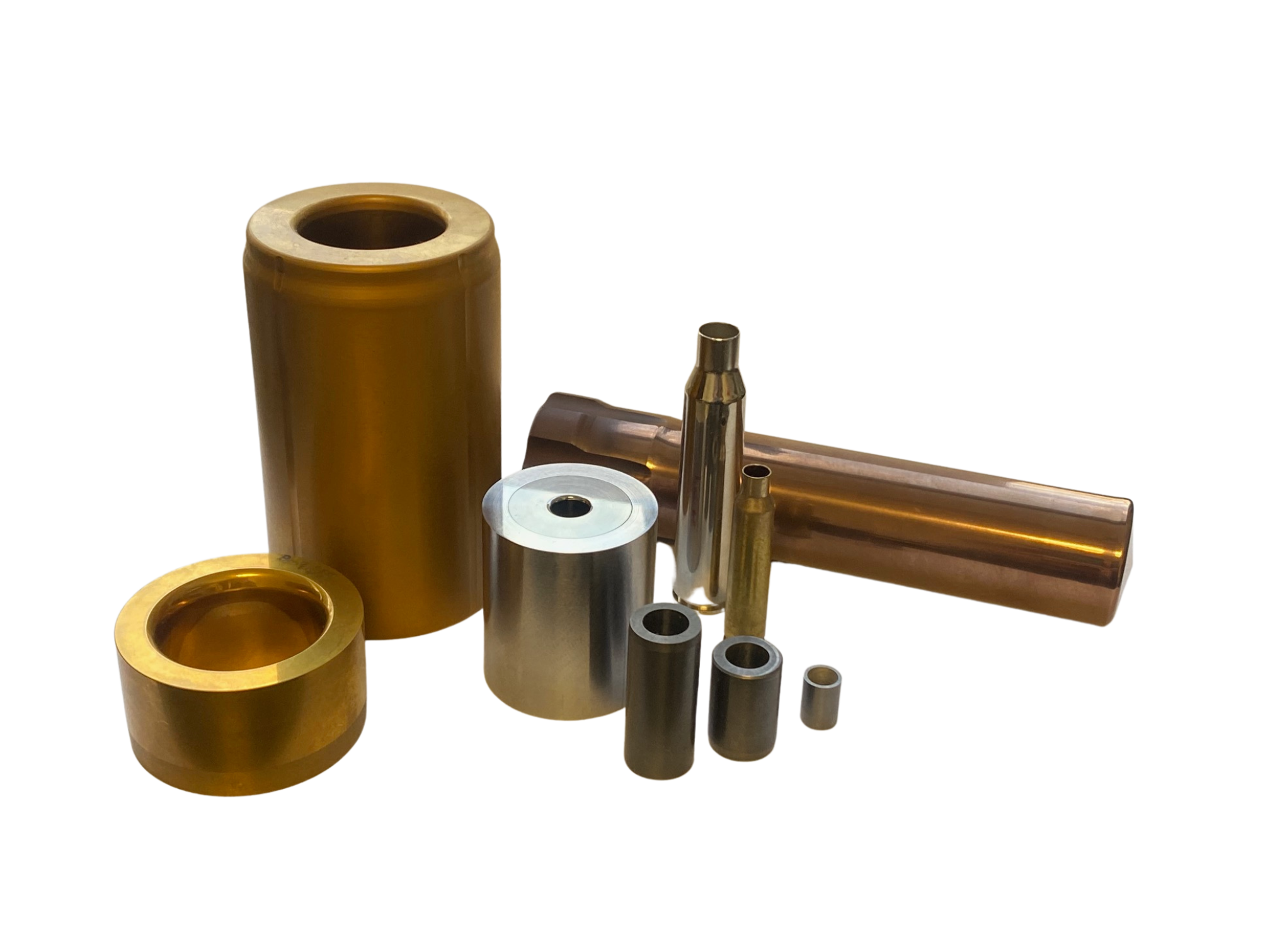
Tuesday, July 26, 2016

Die Making Prints

There are two kinds of prints in tool and die. You will recognize both of these! I work in carbide die manufacturing and prefer type 2. Let me know what kind you get.


Tooling Print: Type 1. Good Luck.
Type 2. - Got it!

Wednesday, June 22, 2016

Machine Shop Tools 101

Good Advice for all Machine Shops.


Any real machine shop will have tools like this. Its a Hammer-pliers-screwdriver. More handy than your typical Wrench-Knife.


And here is the worlds biggest machine. It does some mining work in Germany and may or may not be involved in a plot to saw off part of Czechoslovakia.


Only true machinists can enjoy this sweet music.


Friday, September 4, 2015

Beauty of Carbide Dies and Tool and Die

Machining can be a beautiful thing at times, it is an act of creation after all. The birth of an object from it's raw materials. Sometimes it takes slowing the action down to capture the amazing life in side of carbide die making and tool and die in general. Here's some videos of cutting, shaping and forming for you tool heads!


Tuesday, June 9, 2015

U.S. Manufacturing Growth Accelerates

For the first time in six months, U.S. manufacturing has grown substantially from more new orders
US Manufacturing Accelerates
US Manufacturing - Cautiously Optimistic
being placed and more employees being put to work.
The increase in factory activity indicates the economy may be beginning to grow again after dwindling for the first three months of the year. Yet, overall growth remains slow, due to a multitude of factors. Americans have been unwilling to spend, even though there is more work and even low gas prices allowing more flexibility to spend.
The value of the dollar increasing acutely has made U.S. goods more expensive overseas, decreasing exports. Economists predict the economy may grow at a 2 percent annual pace in the April-June quarter, after a 0.7 percent decline in the first three months of the year.
With the end of a labor dispute at West Coast ports, manufacturers have benefited from parts and raw materials flowing more freely.
Signs also point to the stabilizing of overseas economies. China's manufacturing sector expanded last month, although not very rapidly, reported by an official manufacturing index. Manufacturing in the European Union has also picked up.
U.S. export orders did not see any rise or fall last month, after increasing in April. This is still preferred to the three months of the first quarter when export orders were receding.
Fourteen industries reported growth last month, including clothing, furniture, paper products and food and beverages. Two industries reported contraction: textile mills and computers and electronics.
The dramatic drop in the price of oil, from $110 a barrel last June to less than $50 in January, has caused drilling companies to cut back heavily on digging and building new wells. These cut backs have drastically reduced the demand for steel pipe and other equipment.
Business spending on buildings and equipment dropped 2.8 percent in the first quarter, the largest drop in more than five years. Despite all of this, there are signs that businesses, specifically those outside oil and gas, are spending more on expensive items such as machinery.


Tuesday, January 27, 2015

Die Maker Life

.
When you're out of tolerance, every industrial die maker knows this feeling! The job was done quickly, but then the inspection squad comes in and .... ugh..

Grinding

Tool and Die Fact #1

A machinist

Tool and Die Fact #2

Tool and Die: Where this might actually be said.


Wednesday, December 17, 2014

What is Tungsten Carbide?

What is Tungsten Carbide?

So you hear about Carbide Dies and Tooling made out of tungsten carbide, but what exactly is tungsten carbide?


Tungsten carbide

Tungsten carbide (chemical formula: WC) is a chemical compound containing equal parts

of tungsten and carbon atoms. Tungsten carbide starts as a fine gray powder, in its most

basic form. It can be pressed and formed into shapes for use in industrial machinery, cutting

tools, abrasives, armor-piercing rounds, other tools and instruments, and jewelry.

Tungsten carbide is approximately two times harder than steel and has a much higher

density than steel or titanium. Its hardness is comparable with corundum, sapphire and ruby

and can only be polished and finished with abrasives of superior hardness such as cubic

boron nitride and diamond, in the form of powder, wheels, and compounds.

Applications:

Cutting tools for machining

Sintered tungsten carbide cutting tools are much more resistant to abrasion, as well

as, can handle higher temperatures better than high speed steel tools. Carbide

cutting tools are often used for machining through materials such as carbon

steel or stainless steel, as well as in situations where other materials would wear

away, such as in high-quantity production runs. Carbide tools’ sharp cutting edge

lasts longer than other tools, produce a better finish on parts, and their temperature

resistance allows faster machining.

Ammunition

Tungsten carbide is often used in armor-piercing ammunition. WC projectiles were

first used by German Luftwaffe tank-hunter squadrons in World War II. It is an

effective penetrator due to its combination of great hardness and very high density.

Tungsten carbide ammunition can be one of two types: the sabot type (a large arrow

surrounded by a discarding push cylinder) or a subcaliber ammunition. Subcaliber

ammunition is where copper or other relatively soft material is used to encase the

hard penetrating core, the two parts being separated only on impact. Subcaliber

ammunition is more common in small-caliber arms, while sabots are usually

reserved for tank guns.

Nuclear

Tungsten carbide is also an effective neutron reflector and as such was used during

early investigations into nuclear chain reactions, particularly for weapons.

Sports

Tungsten carbide is used by athletes for poles that strike hard surfaces. Trekking

poles, used by hikers for balance and to reduce pressure on leg joints, commonly

use carbide tips to gain traction when placed on hard surfaces, such as rock.

Carbide tips last much longer than other types of tip.

Sharpened carbide tipped spikes can be inserted into the drive tracks

of snowmobiles. These spikes greatly improve traction on icy surfaces. Longer v-

shaped segments fit into grooved rods called wear rods under each snowmobile ski.

The sharp carbide edges help to enhance steering on harder icy surfaces. The

carbide tips and segments reduce wear from crossing roads and other abrasive

surfaces.

Some tire companies offer bicycle tires with tungsten carbide studs for better traction

on ice. These are often preferred to steel studs because of their superior resistance

to wear.

Surgical instruments

Tungsten carbide is also used for making surgical instruments for use in open

surgery (scissors, forceps, hemostats, blade-handles, etc.) and laparoscopic

surgery (graspers, scissors/cutter, needle holder, cautery, etc.). They are much

more costly than their stainless-steel counterparts, but perform better.

Jewelry

Tungsten carbide has become a popular option for bridal jewelry due to its extreme

hardness and high resistance to scratching. The extreme hardness also means that

it can occasionally be shattered under certain circumstances. Tungsten carbide is

roughly 10 times harder than 18k gold.

Other

Tungsten carbide is widely used to make the rotating ball in the tips of ballpoint

pens that disperse ink during writing.

Tungsten carbide is a common material used in the manufacture of gauge blocks,

used as a system for producing precision lengths in dimensional meteorology.


So that's it... now you know the rest of the story... and knowing is half the battle.

Wednesday, November 5, 2014

Tool and Die - A beautiful video...


Some times our trade can be beautiful and satisfying. After all, in tool and die we make things, and creation is beautiful... usually. (birth is often considered an exception;)

So, enjoy a little tool and die... action!!!

How Precision Carbide Dies Deliver Measurable Manufacturing Gains

Tooling should support your production goals — not hold them back. In industries like wire drawing, fastener production, extrusion, and tube...