
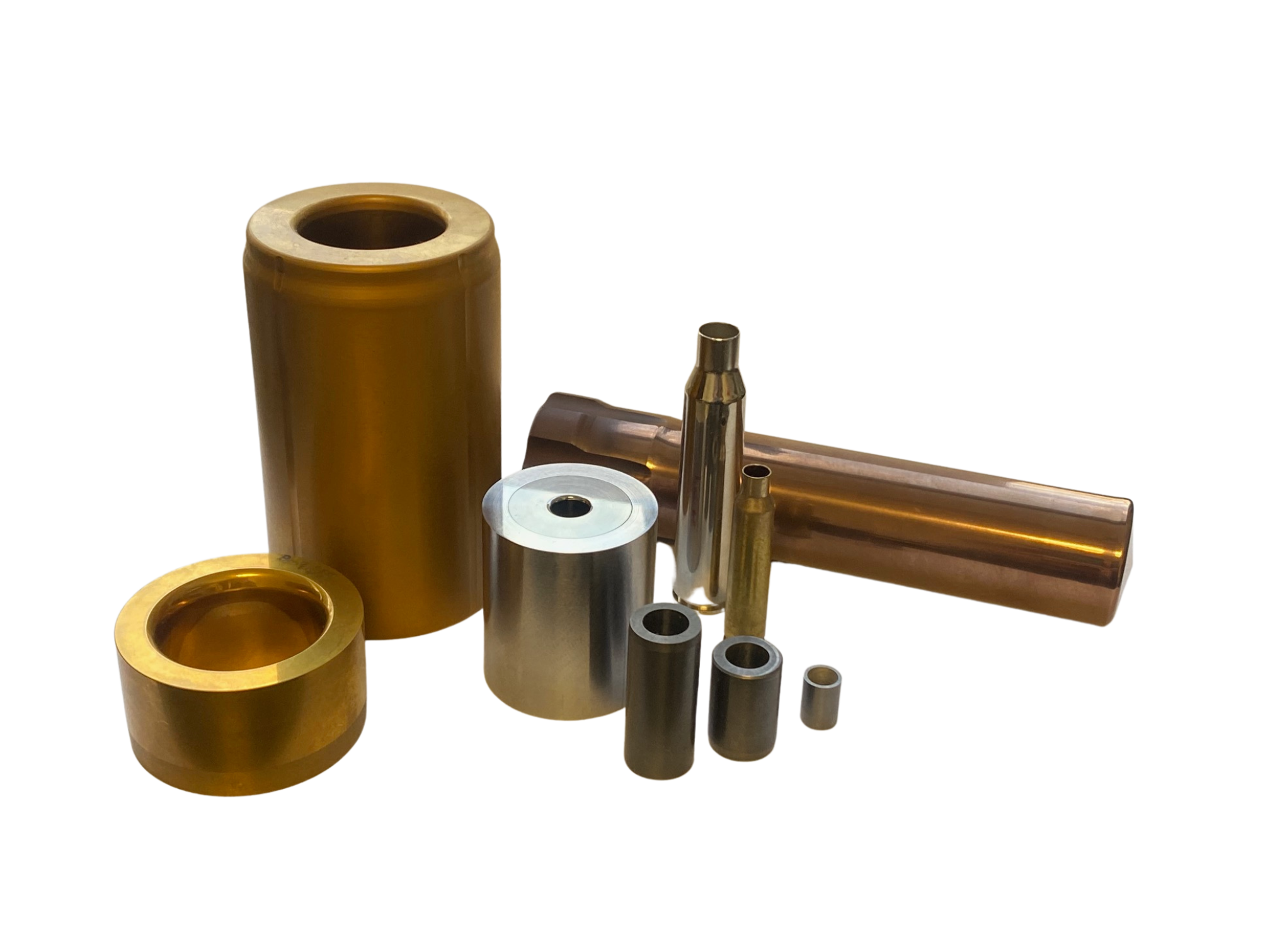


Hot forging shapes heated metal—often at temperatures between 1,500°F and 2,200°F—into durable, complex components. The extreme heat softens the material, allowing for better ductility, improved grain structure, and strong metallurgical performance. This makes hot forging ideal for larger structural components found in automotive, aerospace, agricultural, and industrial equipment.
Even with softer metal, hot forging puts immense stress on tooling. Many dies incorporate carbide inserts in key wear areas to maximize durability and maintain precision at high temperatures. Carbide’s resistance to abrasion and deformation makes it ideal for forging die inserts, trim dies, wear plates, and other components subjected to thermal and mechanical strain.
We produce custom carbide tooling designed to stay stable under heat and pressure—helping manufacturers improve uptime and reduce tooling costs. Contact us today to explore carbide inserts tailored to your forging applications.


